Why Your High-Speed Mixer Causes Material Caking – 3 Key Fixes
Material caking in a high-speed mixer is more than a minor nuisance-it directly affects product quality, production efficiency, and operating costs. Many processors dealing with PVC dry blend, masterbatch, or powder-based formulations eventually face the same issue: material sticking to the chamber wall, forming lumps, and disrupting consistent mixing.
If you are experiencing material caking in a high-speed mixer, it is rarely accidental. In most cases, it results from a combination of heat buildup, poor material flow, and equipment that is not properly matched to the application.
Below, we explain why material caking occurs in high-speed mixers and share three proven fixes that help processors achieve stable, caking-free mixing.
Why Does Material Caking Occur in High-Speed Mixers?
High-speed mixers are designed to generate strong shear and rapid temperature rise through mechanical friction. This is essential for dispersing additives efficiently, but it also increases the risk of powder buildup if the process is not well controlled.
Common causes of high-speed mixer material caking include:
Excessive or uneven temperature rise during mixing
Softening or partial melting of heat-sensitive materials
Fine powders sticking to the mixing chamber or blade surface
Poor circulation that creates dead zones inside the mixer
In practice, caking is rarely just a raw material issue. It is usually a system-level problem involving mixer design, temperature control, and material behavior.
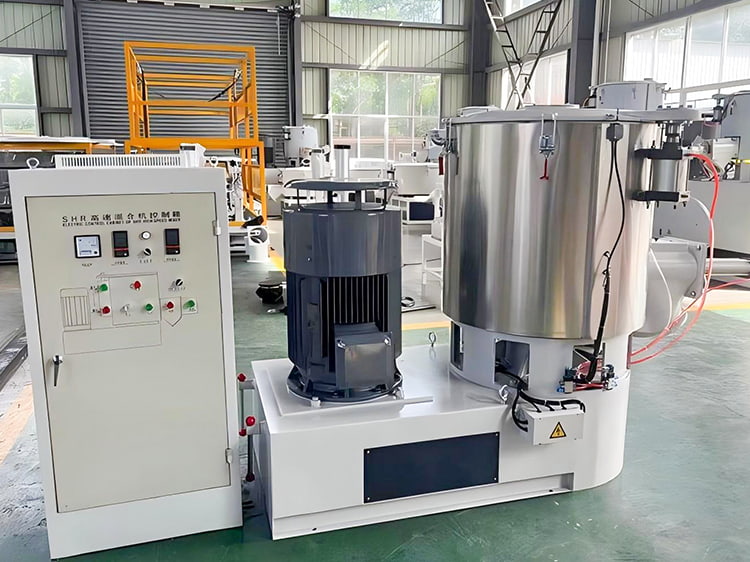
Fix #1: Control Temperature Rise to Prevent Powder Buildup
One of the most effective ways to reduce material adhesion in a mixing chamber is precise temperature control. Many processors assume that higher speed automatically means better mixing, but excessive speed often leads to uncontrolled heat generation.
When PVC resin, plasticizers, or stabilizers overheat, they begin to soften and adhere to metal surfaces. This is a primary reason why operators ask, ''Why does powder stick inside my mixer?''
Effective solutions include:
Uniform heat distribution throughout the mixing chamber
Optimized blade geometry that minimizes local hot spots
Reliable temperature monitoring and repeatable control logic
A well-designed system such as the Audop High-Speed Mixer focuses on controlled energy input rather than brute force, helping prevent powder sticking while maintaining excellent dispersion efficiency.
Fix #2: Improve Material Flow Inside the High-Speed Mixer
Another major contributor to powder buildup in high-speed mixers is poor internal material flow. Caking often begins in areas where material movement slows down or stops entirely.
Design limitations can cause powder to:
Circulate unevenly inside the chamber
Accumulate along the mixer wall
Compact under centrifugal force during high-speed operation
To reduce material caking in industrial mixers, processors should look for:
Smooth, precision-machined mixing chambers
Blade designs that promote both axial and radial movement
Proper clearance between blades and the chamber wall
By maintaining continuous material motion, advanced mixer designs minimize dead zones and significantly reduce the risk of powder sticking and buildup.
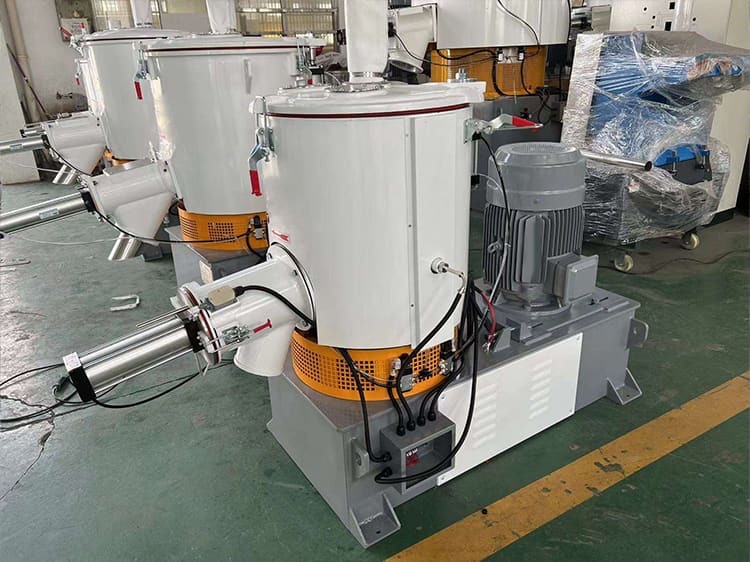
Fix #3: Choose a High-Speed Mixer Matched to Your Material
Not all powders respond the same way to heat and shear. PVC dry blend, calcium carbonate, pigments, and stabilizers each have unique flow and thermal characteristics.
Using a generic mixer for specialized formulations often leads to:
Overheating of heat-sensitive components
Inconsistent dispersion of additives
Increased risk of material caking during high-speed mixing
This is why many processors prefer customized solutions such as the Audop High-Speed Mixer, which can be configured specifically for PVC compounding and plastic processing applications. Matching the mixer to the material-rather than forcing the material to adapt-greatly improves long-term stability.
Why Choose Audop High-Speed Mixer for PVC and Powder Processing?
Audop is an experienced industrial high-speed mixer manufacturer, providing reliable solutions for PVC dry blend and plastic compounding lines.
Key advantages include:
Stable, repeatable mixing performance
Excellent temperature control for PVC heating mixer applications
Reduced material adhesion and easier cleaning
Durable construction for continuous industrial operation
For processors seeking a high-speed mixer for PVC compounding or other powder-based applications, Audop equipment helps reduce downtime caused by cleaning, caking, and inconsistent batches.
High-Speed Mixer FAQs
Why does material stick to the wall of a high-speed mixer?
This is usually caused by excessive heat, poor material flow, or rough internal surfaces. Optimized chamber design and temperature control are key to preventing buildup.
Can increasing mixer speed reduce material caking?
In most cases, no. Higher speed often increases friction and heat, which can worsen powder sticking rather than solve it.
How can I reduce material caking in a PVC heating mixer?
Use controlled temperature rise, proper blade design, and a mixer specifically engineered for PVC dry blend processing.
Final Thoughts
Material caking is not an unavoidable consequence of high-speed mixing. It is a clear signal that the mixing system needs optimization.
By controlling temperature, improving internal material flow, and selecting a high-speed mixer designed for your specific application, processors can effectively eliminate powder buildup and achieve consistent, high-quality results.
In industrial mixing, smarter design always outperforms higher speed.
Why Are High-Speed Mixers So Widely Used
Discover why high-speed mixers are essential in modern manufacturing.Learn how the Audop High Speed Mixing Machine delivers fast,consistent,and efficient performance across plastics,chemicals,and food industries.

PET Bottle Hot Washing Recycling Machine Technology Flow Guide
Discover how a PET Bottle Hot Washing Recycling Machine transforms dirty PET bottles into high-purity recycled flakes.Learn the full technology flow,including sorting,crushing,hot washing,separation,and drying for efficient and high-quality PET recycling.

The Function and Structure of SRL-W Series Horizontal Mixing Unit
SRL-W Series Horizontal Mixing Unit integrates high-speed heating and cooling to deliver uniform,efficient mixing for PVC and thermoplastic production.Ideal for extrusion,coloring,and material preparation.
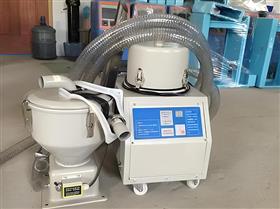
Advantages of The Split-Type Vacuum Feeder
Discover the key advantages of the Split-Type Vacuum Feeder-an energy-efficient,low-noise,and easy-to-maintain material conveying system.Ideal for plastics,food,and pharmaceutical industries,the Audop split-type vacuum feeder ensures clean,flexible.
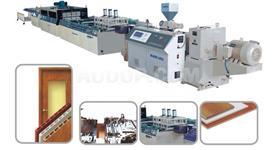
Ultimate Guide for Selecting a PVC Profile Extrusion Production Line
Discover how to choose the right PVC profile extrusion production line with this clear guide covering core components,key technologies,and selection tips to ensure high-quality,efficient,and stable PVC profile manufacturing.